Tummy Tuck
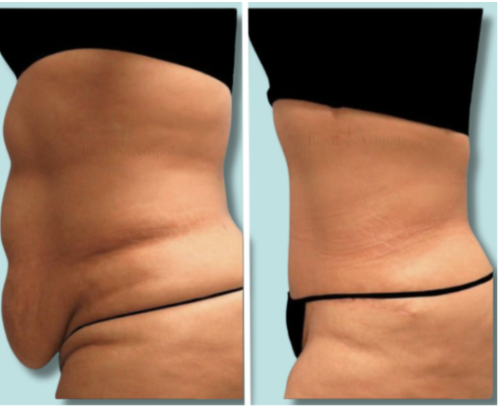
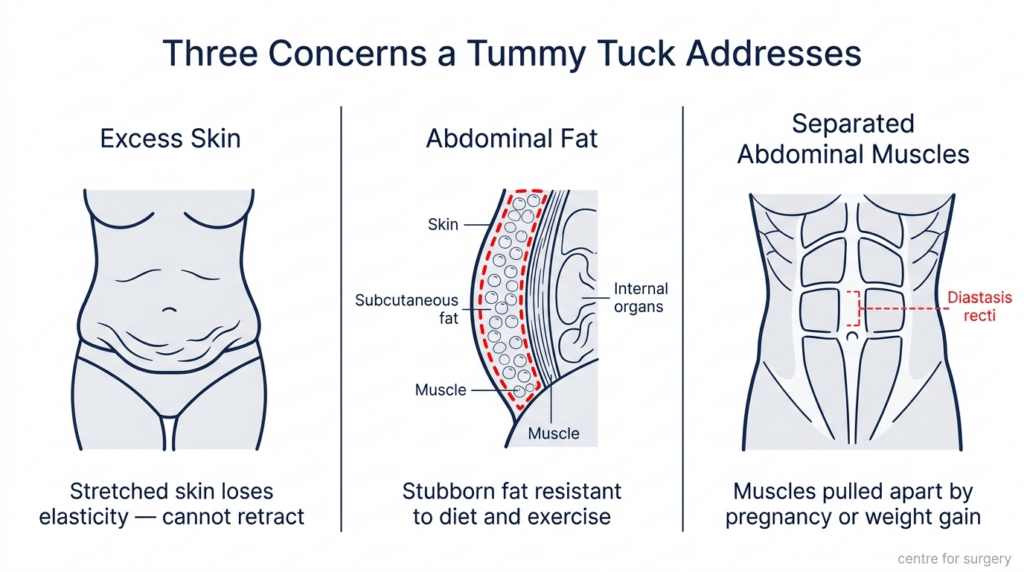
A tummy tuck, medically known as abdominoplasty, is a surgical procedure designed to remove excess skin and fat from the abdominal area and restore weakened or separated abdominal muscles. The result is a firmer, flatter abdomen and an improved waistline contour. This procedure is commonly chosen by patients after significant weight loss, pregnancy, or when diet and exercise have failed to correct loose skin and muscle laxity.
Who is a good candidate?
Adults in good overall health with realistic expectations
Significant skin laxity or excess fat in the lower and/or upper abdomen
Separated or weakened abdominal muscles (diastasis recti)
Stable weight for several months; non-smokers or willing to stop smoking before and after surgery
Committed to maintaining a healthy lifestyle post-surgery
Types of tummy tuck
Full abdominoplasty: Removes excess skin and fat across the entire abdomen; tightens muscles from the ribs to the pubic area; commonly includes repositioning the belly button.
Mini (partial) abdominoplasty: Targets the lower abdomen below the belly button; suitable for patients with limited skin laxity and minor muscle separation.
Extended abdominoplasty: Includes flank/hip contouring for patients with excess skin extending to the sides.
Fleur-de-lis abdominoplasty: Vertical and horizontal incisions for patients with significant excess skin, often after massive weight loss.
Procedure overview
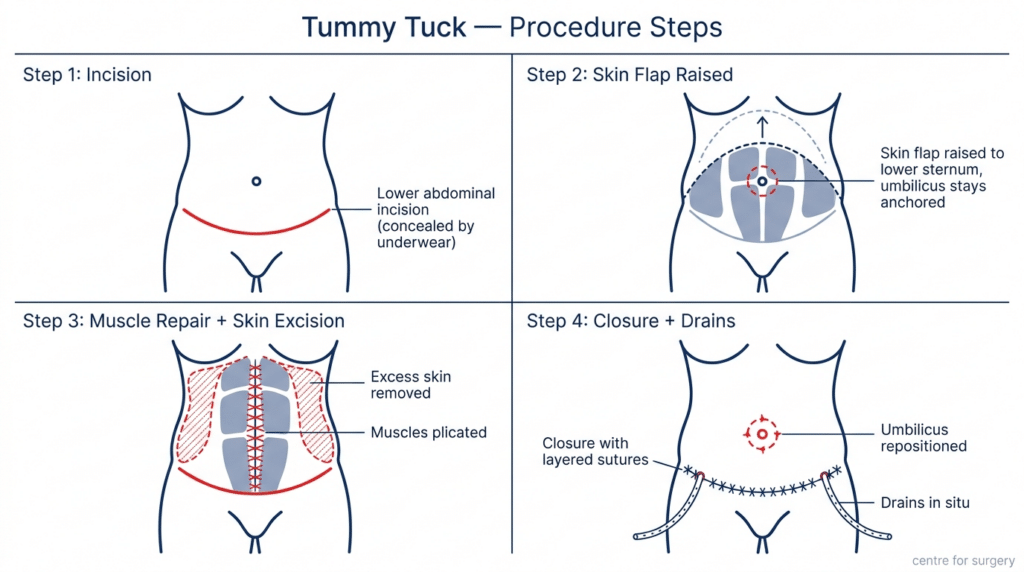
Performed under general anesthesia. Incision placement varies with the chosen technique (typically positioned low on the abdomen so it can be concealed by underwear). Excess skin and fat are removed, and the underlying abdominal muscles are tightened with sutures to reinforce the abdominal wall. Temporary drains may be inserted to prevent fluid accumulation. The incision is closed with layered sutures, followed by dressings and the application of compression garments for support.
Recovery and downtime
Initial recovery: 1–2 weeks of rest with limited activity; many patients return to light duties in 2–4 weeks
Full recovery: 6–12 weeks for more strenuous activities and exercise
Expect bruising, swelling, and temporary numbness around the incision sites
Follow postoperative instructions closely: wound care, activity restrictions, and use of compression garments to optimize results and reduce complications
Risks and considerations
Common risks: bleeding, infection, scarring, seroma (fluid collection), altered sensation
Less common but serious risks: blood clots, poor wound healing, need for revision surgery
Scarring is permanent but typically fades and can be placed to be hidden by underwear or swimwear
A thorough consultation and preoperative assessment help minimize risks
Results and longevity
Many patients experience dramatic improvement in abdominal contour and clothing fit
Results are long-lasting when weight is stable and a healthy lifestyle is maintained
Pregnancy after a tummy tuck can compromise results; discuss family planning with your surgeon
Why choose MedSanctuary in Thailand
Experienced, board-certified plastic surgeons and accredited surgical facilities
Affordable all-inclusive packages with post-op care and accommodation
Comprehensive Post-Op Care Program to support recovery and follow-up
Significant cost savings—up to 70% cheaper than typical prices in many countries—without compromising safety and quality
If you’re considering a tummy tuck, schedule a consultation to evaluate your goals, review your medical history, and determine the procedure type best suited to your needs.