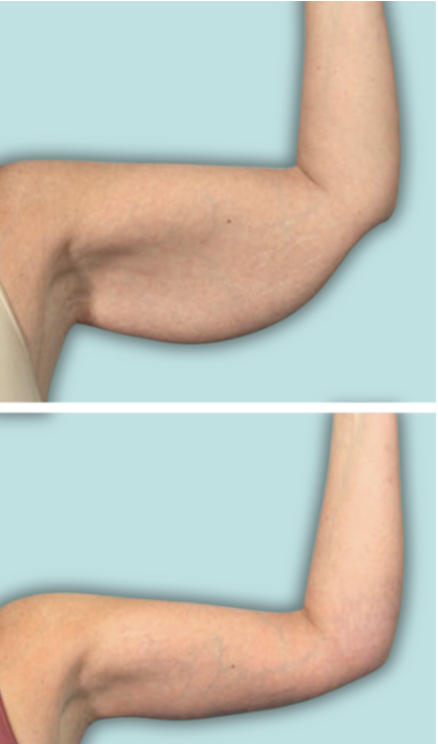
Introduction and Detailed Guide
An arm lift, medically known as brachioplasty, is a surgical procedure designed to reshape the upper arm by removing excess skin and fat, tightening underlying tissues, and creating a more defined, contoured arm silhouette. It is commonly performed for patients who experience sagging or drooping of the upper arms due to aging, significant weight loss, genetics, or decreased skin elasticity.
Who is a good candidate?
Excess skin and soft tissue laxity of the upper arms that does not improve with diet or exercise.
Stable body weight for at least 6–12 months.
Good overall health without uncontrolled chronic conditions (e.g., diabetes, cardiovascular disease).
Non-smokers or willing to stop smoking for several weeks before and after surgery.
Realistic expectations about scarring and outcome.
Psychological readiness and clear surgical goals.
Types of Arm Lift Procedures
Traditional (Standard) Brachioplasty: Incision along the inner arm from the armpit to the elbow; allows removal of significant excess skin and fat; best for moderate-to-severe laxity.
Limited-Incision (Mini) Brachioplasty: Shorter incision confined to the armpit region or upper-inner arm; appropriate for mild to moderate sagging.
Posterior Brachioplasty: Incision along the back of the arm; chosen for scar placement preference or specific contour needs.
Extended Brachioplasty: Incision extended into the lateral chest or axilla to address excess tissue beyond the upper arm (useful after massive weight loss).
Brachioplasty with Liposuction: Combines skin excision with liposuction to refine fat contours; useful when excess fat distribution contributes to arm volume.
Nonexcisional Techniques: Non-surgical options like radiofrequency or ultrasound skin tightening exist but are generally less effective for substantial excess skin.
Preoperative Evaluation and Preparation
Medical history and physical exam focused on arm tissue quality and skin elasticity.
Photographic documentation for planning and records.
Blood tests and medical clearance as indicated (EKG, metabolic panel).
Discussion of medications and supplements — anticoagulants, NSAIDs, certain herbal supplements should be stopped per surgeon guidance.
Smoking cessation for at least 4–6 weeks pre- and post-op to reduce complications and improve healing.
Weight stabilization and realistic expectation counseling.
Planning for postoperative support and accommodation (wound care, limited lifting, assistance at home).
Surgical Technique (General Steps)
Anesthesia: Typically general anesthesia or regional block with sedation.
Marking: Surgeon marks incision lines with the patient standing to map areas of excess skin/fat.
Incision: Pattern depends on chosen technique (inner arm, posterior, or extended).
Tissue Management: Excise excess skin and subcutaneous tissue; may include liposuction to contour.
Muscle/Tissue Tightening: Deep fascial and subcutaneous layers may be tightened with sutures to improve contour and reduce tension on the skin closure.
Hemostasis: Careful bleeding control and placement of drains if needed.
Closure: Layered suturing to minimize tension; skin closed with fine sutures; dressings and compression garments applied.
Expected Results and Longevity
Improved arm contour, reduced sagging, and firmer overall appearance.
Results are long-lasting but influenced by aging, weight fluctuations, and lifestyle.
Maintaining stable weight and regular exercise preserves outcomes.
Scarring
Scars are the primary trade-off of brachioplasty. Typical locations:
Inner arm from armpit to elbow (most common) — visible when arms are raised.
Posterior arm or axillary scars depending on approach.
Scars usually start red and raised, then flatten and fade over 12–18 months.
Scar management: silicone sheets/gels, sun protection, topical treatments, and professional scar revision if needed.
Recovery Timeline
Immediate: Pain, swelling, bruising; arms wrapped with compression garments; drains may be present for 1–7 days.
First week: Limited activity; hand/forearm movement encouraged; pain controlled with medications.
2–4 weeks: Gradual return to light activities and non-strenuous work; avoid heavy lifting and overhead activities.
4–8 weeks: Most swelling subsides; resume moderate exercise with surgeon approval.
3–6 months: Continued softening and improvement in contour and scar maturity.
Full recovery and final results may be seen by 6–12 months.
Risks and Complications
Common temporary effects: swelling, bruising, numbness or altered sensation, discomfort, tightness.
Early complications: hematoma, seroma, wound separation, infection.
Delayed complications: hypertrophic
Arm Lift
Every arm we lift is crafted with intention — shaping confidence, comfort, and lasting results.