

Deep Plane Facelift
*
Deep Plane Facelift *
Choosing facial rejuvenation surgery is one of the most considered decisions a person makes. This guide exists to give you clear, honest information — not marketing — so you can decide whether a deep plane facelift and neck lift is right for you, and whether having it performed in Bangkok with a board-certified surgeon is a path that suits your goals, your budget, and your peace of mind.
Take your time with it. Read it twice. Bring your questions to your consultation.
What Is a Deep Plane Facelift?
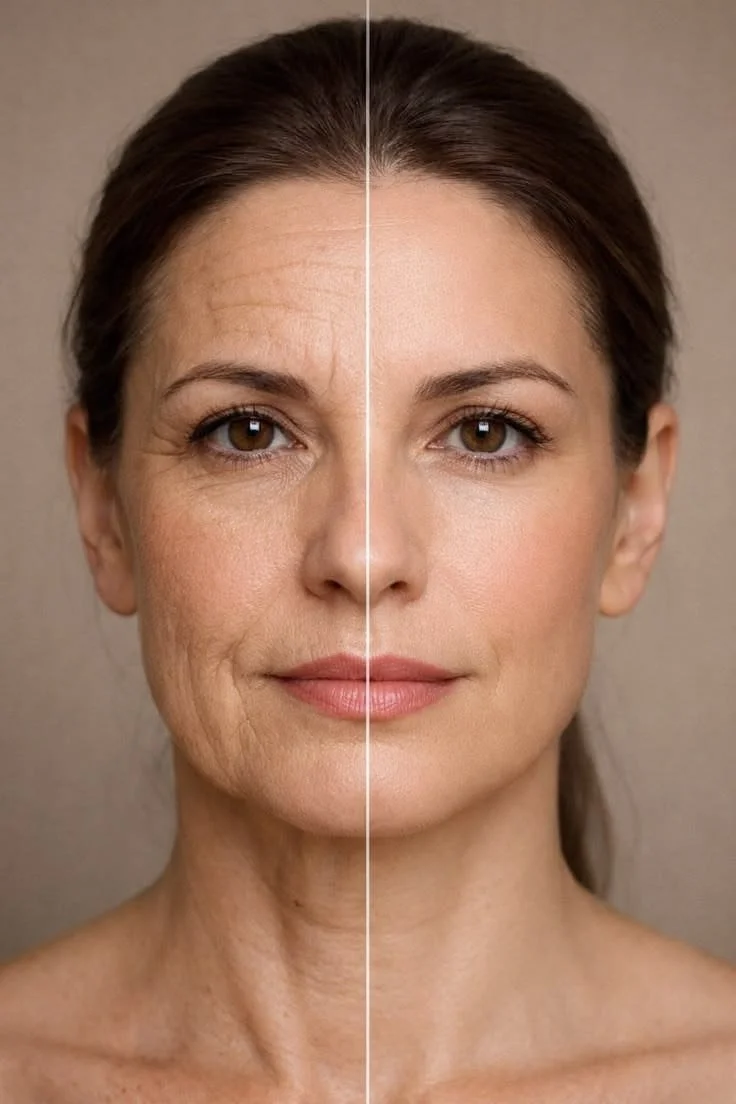
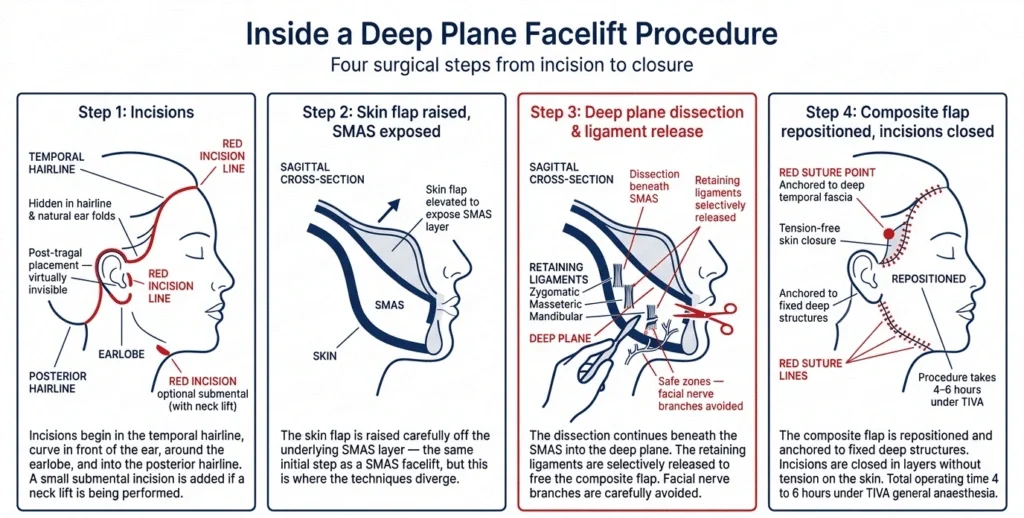
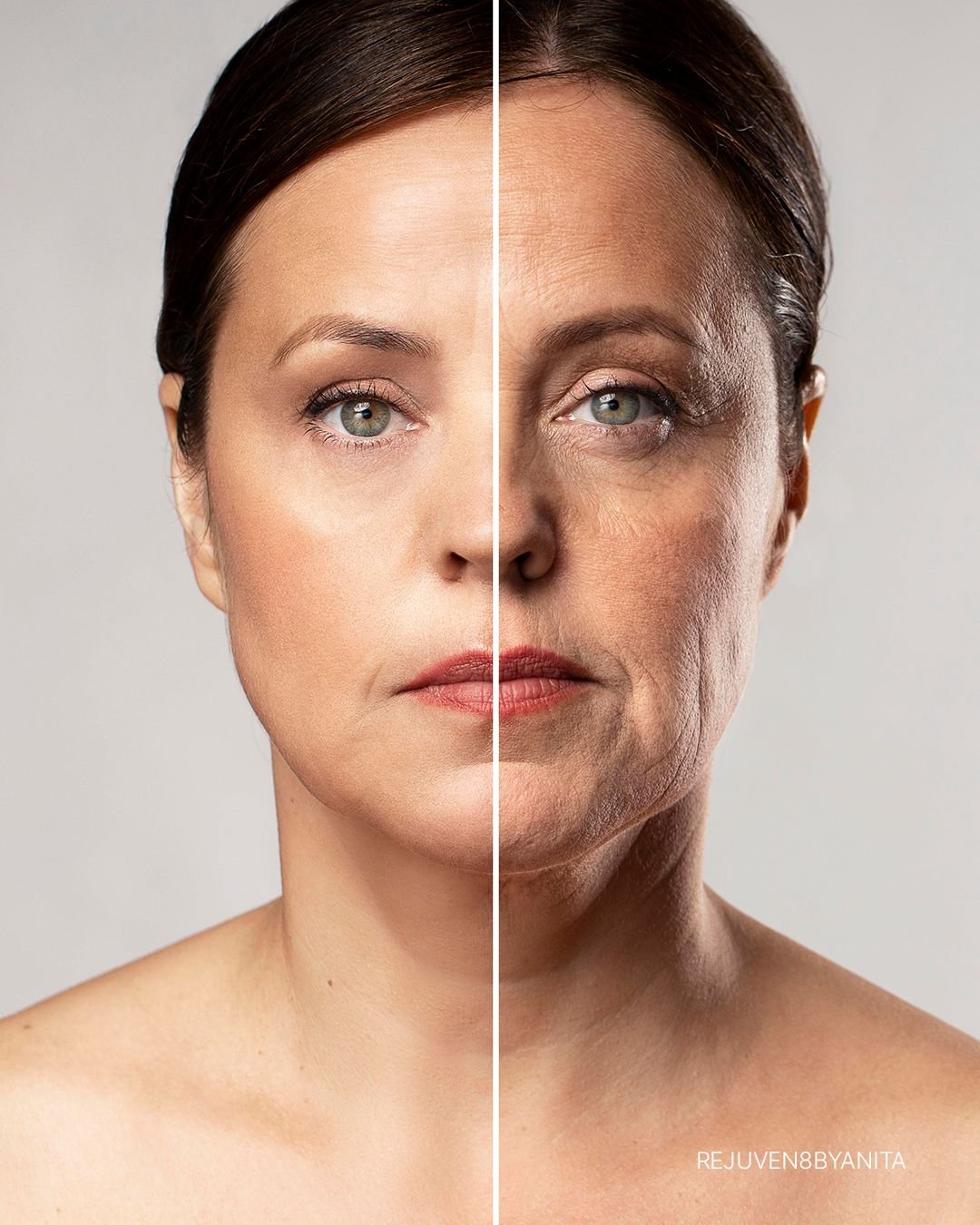
The face ages in layers. Beneath the skin sits a sheet of muscle and connective tissue called the SMAS (superficial musculoaponeurotic system). Over time, the ligaments that anchor this layer loosen, and the whole structure descends — creating jowls, deepening the folds beside the nose and mouth, and softening the jawline.
A deep plane facelift works underneath the SMAS layer rather than on top of it. The surgeon releases the specific facial ligaments that tether the tissue down, then repositions the entire deep layer — muscle, fat, and skin together — as one unified unit. Because the lift happens at this deeper level, the skin is never pulled tight on its own.
This is the key difference from older techniques. Traditional facelifts pull the skin and stitch the SMAS separately, which can create a tight, "windswept" look when overdone. The deep plane approach repositions tissue along natural anatomical planes, producing a result that tends to look more natural and last longer.
What Is a Neck Lift?
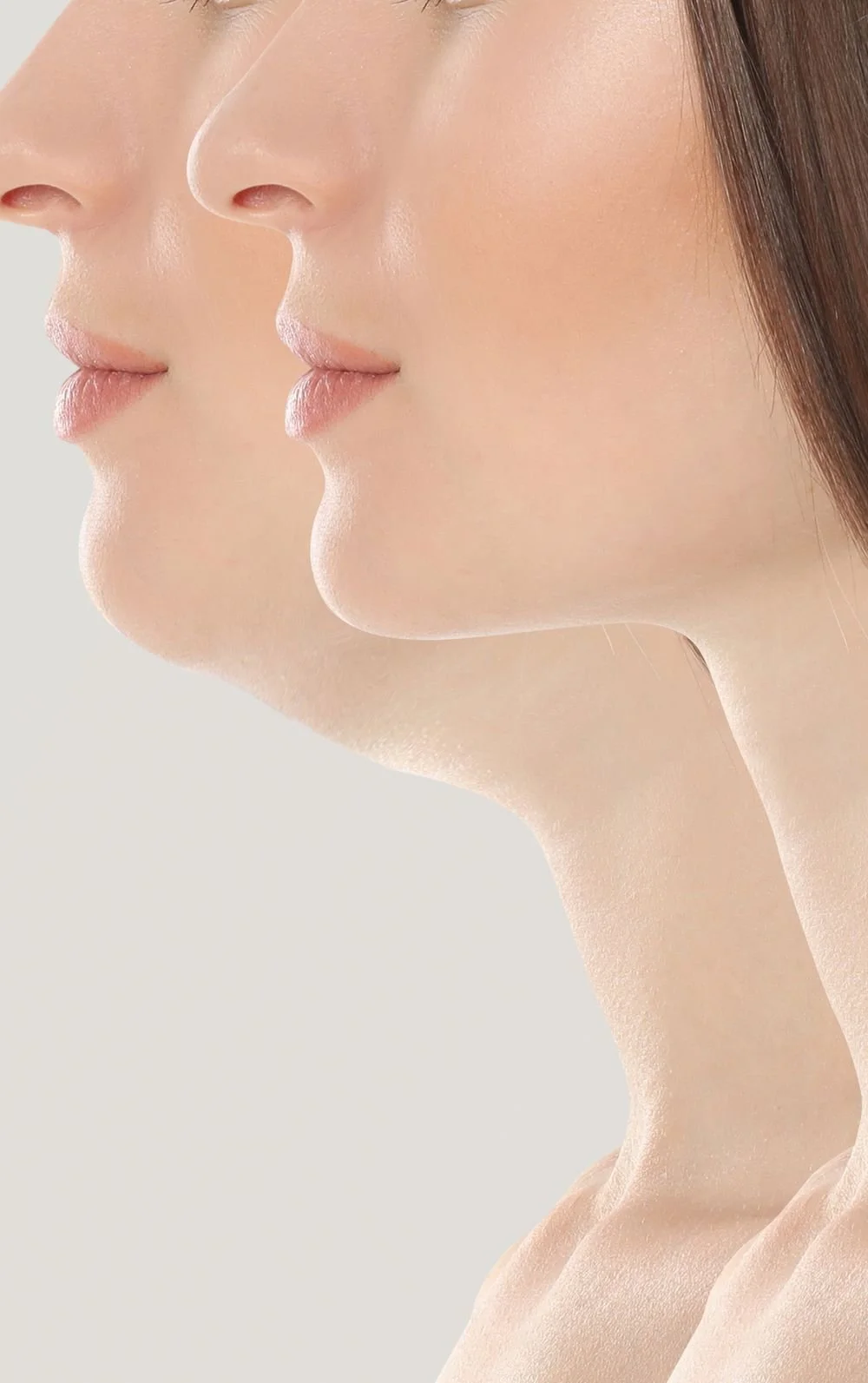
A neck lift addresses the area a facelift alone cannot fully reach: the loose skin under the chin, the vertical "banding" caused by the platysma muscle separating, and accumulated fat that blurs the jaw-to-neck angle.
In a deep plane procedure, the neck is usually treated through:
Platysmaplasty — tightening and re-suturing the neck muscle through a small incision under the chin
Liposuction or direct fat removal — refining the contour beneath the jaw
Skin redraping — removing excess skin via incisions behind the ears
The facelift and neck lift are almost always performed together, because rejuvenating the face without addressing the neck creates an unbalanced result.
What These Procedures Will — and Will Not — Do
They will:
Restore a more defined jawline and neck angle
Lift sagging cheeks and reduce jowling
Soften the deep folds from nose to mouth
Produce results that typically last 10–15 years
They will not:
Change skin quality, sun damage, or fine surface lines (these need resurfacing, skincare, or other treatments)
Stop the natural aging process
Lift the brow or treat the eyes (these are separate procedures)
Make you look like a different person
A facelift turns back the clock; it does not stop it.
ARE YOU A CANDIDATE?
You may be a good candidate if you:
Are generally in good health
Have visible mid-face and neck laxity
Are a non-smoker, or willing to stop well before and after surgery
Hold realistic expectations
Can commit to the recovery period away from home
Factors your surgeon will assess carefully include diabetes, blood pressure, blood-thinning medication, prior facial surgery, and smoking history. Full honesty during your medical screening is essential — it directly affects your safety.
YOUR SURGICAL JOURNEY WITH MEDSANCTUARY
Step 1 — Enquiry & Photo Assessment
You share photos and your goals. Dr. Dominic reviews them and provides initial guidance on suitability and approach.
Step 2 — Personalised Quotation
You receive a transparent, all-inclusive quotation. No hidden surgical fees.
Step 3 — Virtual Consultation
A direct video consultation with the surgeon to discuss your plan, expectations, and any concerns.
Step 4 — Planning Your Trip
Your coordinator arranges scheduling, accommodation guidance, airport transfers, and your full itinerary.
Step 5 — Arrival & In-Person Consultation
You meet the surgeon in person. Final markings, measurements, and pre-operative checks are completed.
Step 6 — Surgery Day
The procedure is performed in an accredited hospital operating theatre under the care of a qualified anaesthetist.
Step 7 — Recovery in Bangkok
You remain in Bangkok for monitored recovery, with follow-up reviews before you are cleared to fly home.
Step 8 — Aftercare from Home
Ongoing remote follow-up and support as you heal over the following months.
Recovery Time
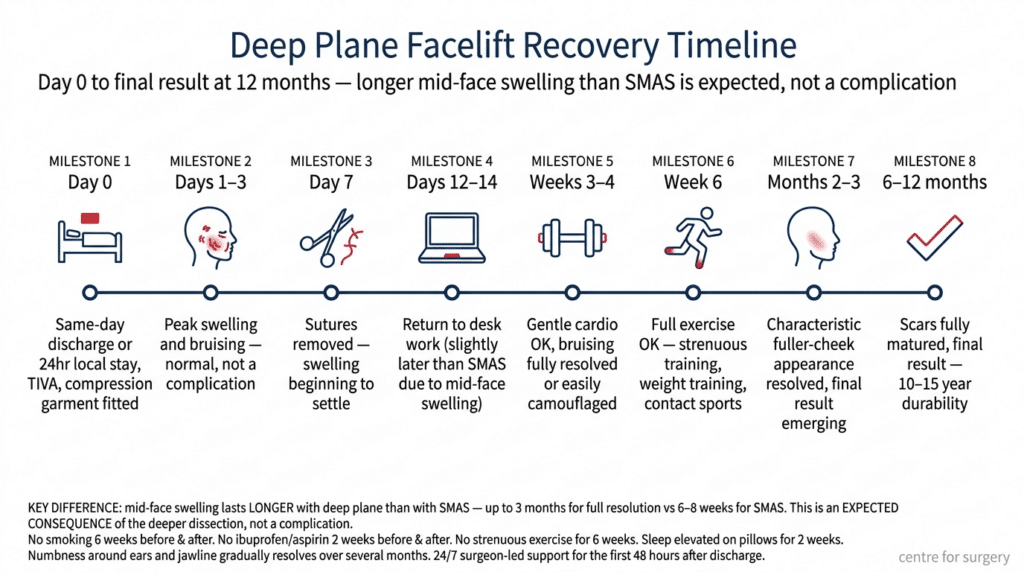
Days 1–3: Swelling and bruising peak. Drains (if used) typically removed. Rest, head elevated.
Week 1: Sutures and any remaining drains removed. Bruising begins to fade. Most patients feel presentable enough for quiet activity.
Weeks 2–3: Significant improvement. Many return to non-physical work. This is generally the earliest safe window to fly home, subject to surgeon clearance.
Weeks 4–6: Residual swelling continues to settle. Light exercise may resume with approval.
Months 3–6: The face continues to refine. Final scar maturation and full results emerge over 6–12 months.
WHY BANGKOK, WHY MEDSANCTUARY
Australia and New Zealand have world-class surgeons — and prices to match. A comparable deep plane facelift and neck lift can cost significantly more at home than the same standard of care in Bangkok, even after flights and accommodation.
MedSanctuary exists to make that journey safe and seamless: one transparent price, one dedicated coordinator, board-certified surgical care, and support from your first enquiry to your final follow-up.
-
Typically 10–15 years, though aging continues naturally.
-
Incisions are placed in natural creases around and behind the ears, and under the chin. They fade substantially over time.
-
Plan for around 2 weeks, subject to your surgeon's clearance to fly.
-
This is discussed in consultation; the anaesthetic approach is tailored to you and your procedure.
-
You receive ongoing remote follow-up, and your coordinator helps you navigate any concerns.
-
Choosing a surgeon for a deep plane facelift in Thailand should come down to three things: verified board certification, an accredited hospital with a qualified anaesthetist present for every case, and direct experience with this specific deep-plane technique. At MedSanctuary, procedures are performed by Dr. Rushapol Sdawat, a board-certified plastic surgeon with 28 years of experience and an ISAPS member since 2008, at Intrarat Hospital, which holds ISO 9001:2015 and ISAPS/ASPS accreditation. Whichever surgeon or clinic you consider, ask to see their credentials, before-and-after cases of this exact procedure, and how complications and follow-up care are handled once you return home.
