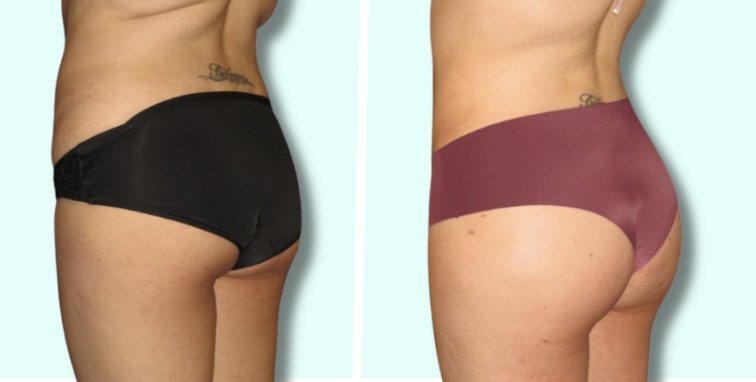

Buttock Lift & Implant
Buttock Lift and Implants
Purpose: Improve shape, contour, symmetry, and projection of the buttocks.
Common procedures:
Buttock lift (gluteal lift): Removes excess skin and lifts sagging tissue, often after weight loss or aging.
Buttock implants (gluteal augmentation with implants): Silicone implants inserted to increase volume and projection.
Fat grafting (Brazilian Butt Lift, BBL): Liposuction harvests fat from other areas and injects it into the buttocks (see note below about safety).
Who may benefit: Patients with sagging, volume loss, asymmetry, or those seeking more projection and contour. Ideal candidates are in good health, non-smokers, and have realistic expectations.
Important safety note
Fat grafting (BBL) carries specific risks, including rare but serious risk of fat embolism when fat enters large veins. Many experienced surgeons recommend strict safety protocols. Discuss options and risks thoroughly with your surgeon. Buttock implants avoid fat embolism risk but have other considerations (infection, implant issues).
Preoperative considerations
Medical evaluation: Full medical history, physical exam, possible lab tests, and imaging as needed.
Medications: Discontinue blood-thinning medications and certain supplements per surgeon instructions. Inform about all medicines and allergies.
Smoking and vaping: Must stop several weeks before and after surgery to reduce risk of complications and improve healing.
Weight stability: Achieve and maintain a stable weight. Major weight fluctuations affect results.
Realistic expectations: Discuss desired shape, size, and potential limitations. Review before-and-after photos and surgical plan.
Informed consent: Understand risks, benefits, alternatives, recovery timeline, and follow-up schedule.
Procedure details
Buttock Lift
Anesthesia: General anesthesia or intravenous sedation with local anesthesia.
Technique: Incisions vary — lower back, along the top of the buttocks, or around the buttock crease depending on amount and location of excess tissue. Excess skin is removed, underlying tissues are tightened, and remaining skin is repositioned.
Duration: 2 to 4 hours typically.
Scarring: Scars correspond to incision sites. They may fade over time but remain permanent.
Goals: Improve lift, tighten skin, correct sagging and contour irregularities.
Buttock Implants
Anesthesia: General anesthesia.
Technique: Small incision in the gluteal crease or between the buttocks. A pocket is created either under (subfascial/submuscular) the gluteal muscle or above it (subcutaneous, less common). Silicone implants are positioned for symmetry and projection.
Implant types: Solid silicone implants designed for gluteal use; sizes chosen to match body proportions and patient goals.
Duration: 1.5 to 3 hours typically.
Scarring: Small scars near incision site; scars may widen in some patients.
Goals: Increase volume and projection, correct contour defects, restore symmetry.
Combined procedures
Some patients combine lift and implants, or combine liposuction and fat grafting to sculpt surrounding areas. Combining procedures increases operative time and recovery demands—discuss risks and benefits with surgeon.
Risks and complications
Common risks: Swelling, bruising, pain, temporary numbness, scarring, asymmetry, dissatisfaction with size/shape.
Specific risks for lifts: Wound healing problems, contour irregularities, fluid collections (seroma).
Specific risks for implants: Infection, implant displacement, capsular contracture (scar tissue around implant), implant rupture (rare with gluteal implants), chronic pain.
General surgical risks: Bleeding, deep vein thrombosis (DVT), pulmonary embolism, anesthesia complications.
Fat grafting-specific risk: Fat embolism (can be fatal). Ensure surgeon follows safe injection protocols.
Recovery and aftercare
Immediate post-op:
Expect drains in some cases (commonly after lifts or implants) to reduce fluid buildup.
Pain is managed with prescribed medications.
Dressings and compression garments will be applied; wear as instructed to reduce swelling and support tissues.
Activity restrictions:
No sitting directly on the buttocks for 2 to 6 weeks depending on the procedure and surgeon guidance; use special pillows or modified sitting positions.
No heavy lifting or strenuous exercise for at least 4 to 8 weeks; gradual return to normal activity as cleared.
Driving only when able to sit comfortably and not taking narcotic pain medications.
Wound care:
Keep incisions clean and dry. Follow instructions for dressing changes and showering.
Monitor for signs of infection: increasing redness, swelling, bad odor, fever, or unusual drainage—report to clinic immediately.