
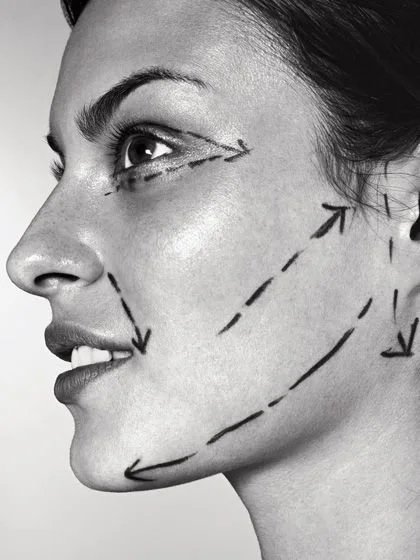
Deep Dive about MedSanctuary. Surgical Experience, Surgeon, Care Program and more.
This blog provides clear, professional guidance for international patients considering plastic surgery in Thailand, highlighting MedSanctuary’s affordable all-inclusive packages, comprehensive post-op care program, and comfortable accommodation options. It explains how procedures can cost up to 70% less than in many patients’ home countries without compromising safety or quality, outlines pre-travel planning and surgical consultation steps, and emphasizes accreditation, experienced surgeons, and personalized recovery support. Practical tips on choosing the right procedure, understanding risks, preparing for travel, and maximizing recovery outcomes are included, alongside patient testimonials and transparent pricing to help readers make informed decisions with confidence.
Med Sanctuary: A Comparative Strategic Analysis for the Australian Market

1. The Medical Tourism Paradigm: A New Standard for Australian Patients
For the Australian patient, the domestic surgical landscape is increasingly defined by a restrictive dichotomy: prohibitive private healthcare costs on one hand, and exhausting public waiting lists on the other. While medical tourism has long been a fallback, the historical "leap of faith" associated with fragmented offshore options often compromises patient safety and outcome quality. Med Sanctuary represents a strategic paradigm shift, moving beyond mere facilitation to an integrated "continuity of care" model. By bridging the gap between world-class Thai surgical expertise and Australian clinical expectations, we ensure that the patient’s journey is defined by the core brand promise: “Expert hand, never on your own.”
The Med Sanctuary Philosophy is anchored by three strategic pillars designed to eliminate surgical uncertainty:
Uncompromising Safety: Every facility within the network is rigorously vetted to meet Australian-standard protocols. Safety is not a variable; it is a non-negotiable baseline supported by international hospital accreditation.
Surgical Artistry: We prioritize board-certified leaders, specifically Dr. Dominic Rushapol, who brings over 25 years of specialized expertise. This ensures results that are medically sound and aesthetically refined.
Seamless Concierge: Our "Never on Your Own" protocol manages the entire logistical architecture—from private medical transfers and nurse-supported recovery suites to 30-meal nutritional plans and long-term aftercare.
These pillars form a protective "sanctuary," removing the psychological and logistical burdens of overseas surgery and replacing the traditional "leap of faith" with a structured, professional medical pathway.
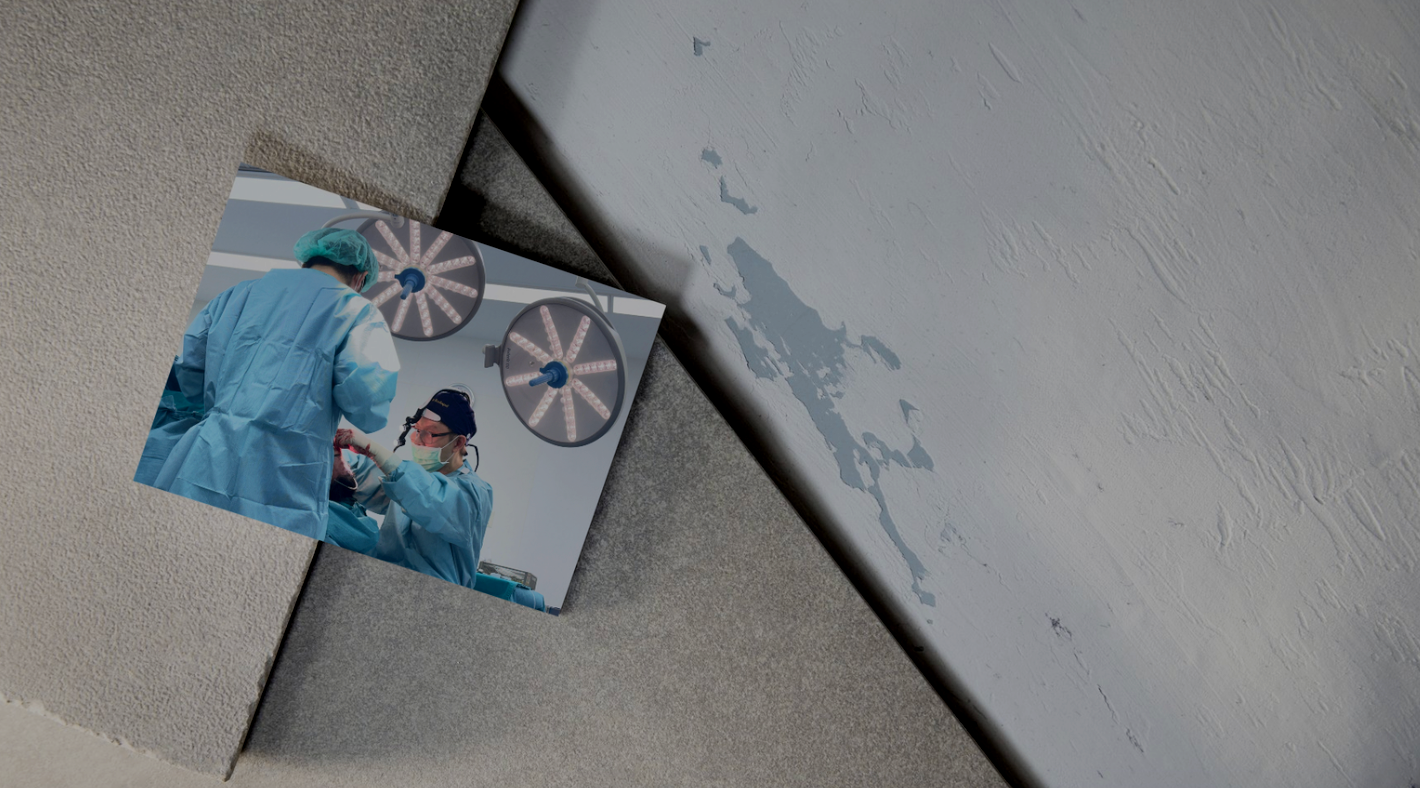
2. Clinical Superiority: The Dr. Dominic Rushapol & Intrarat Synergy
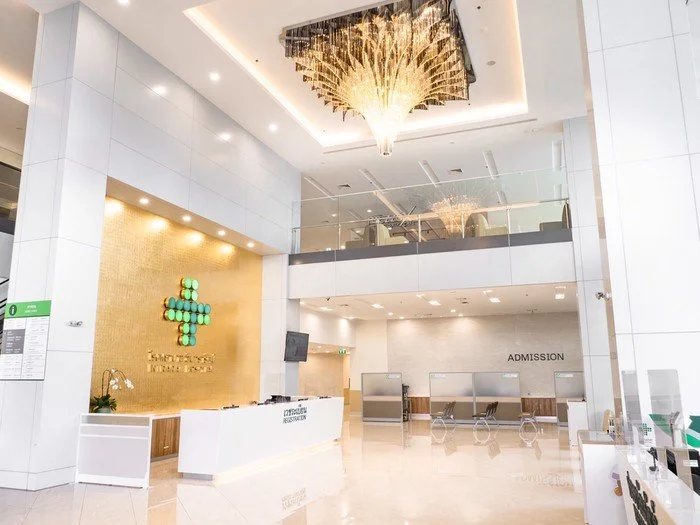
In high-stakes aesthetic surgery, the credentials of the lead surgeon and the technical capacity of the facility are the primary determinants of risk mitigation. Med Sanctuary’s partnership with Dr. Dominic Rushapol and Intrarat Hospital provides a level of clinical synergy rarely found in standard medical tourism.
Surgeon Profile: Dr. Dominic Rushapol
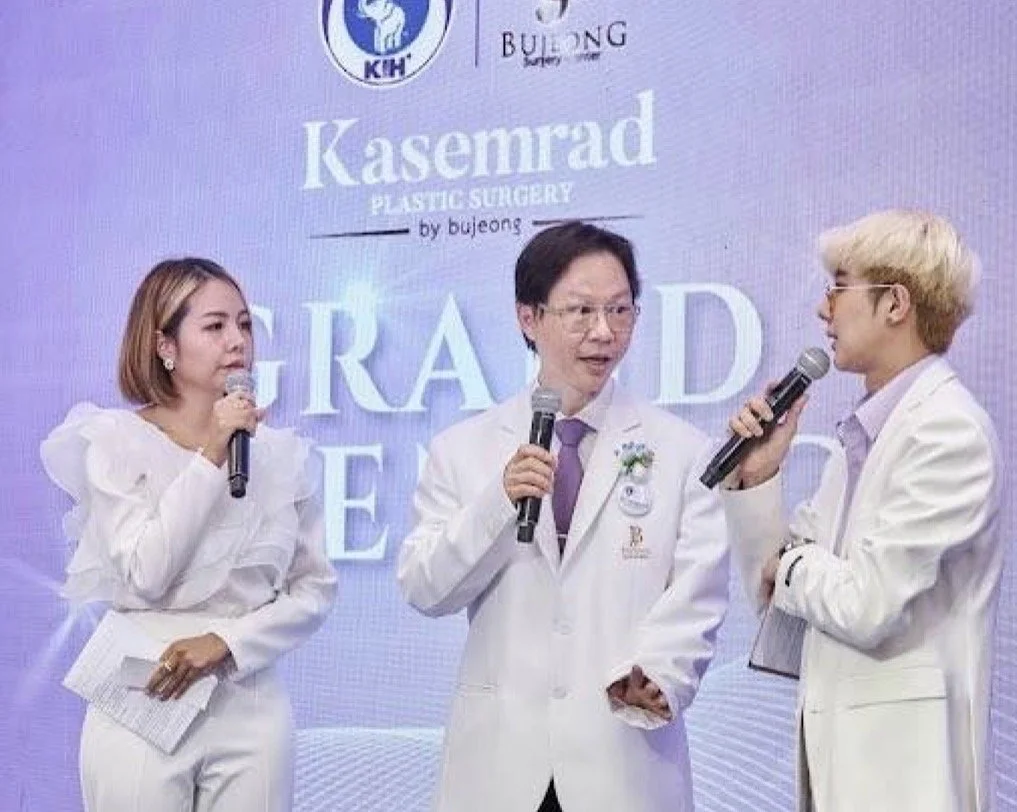
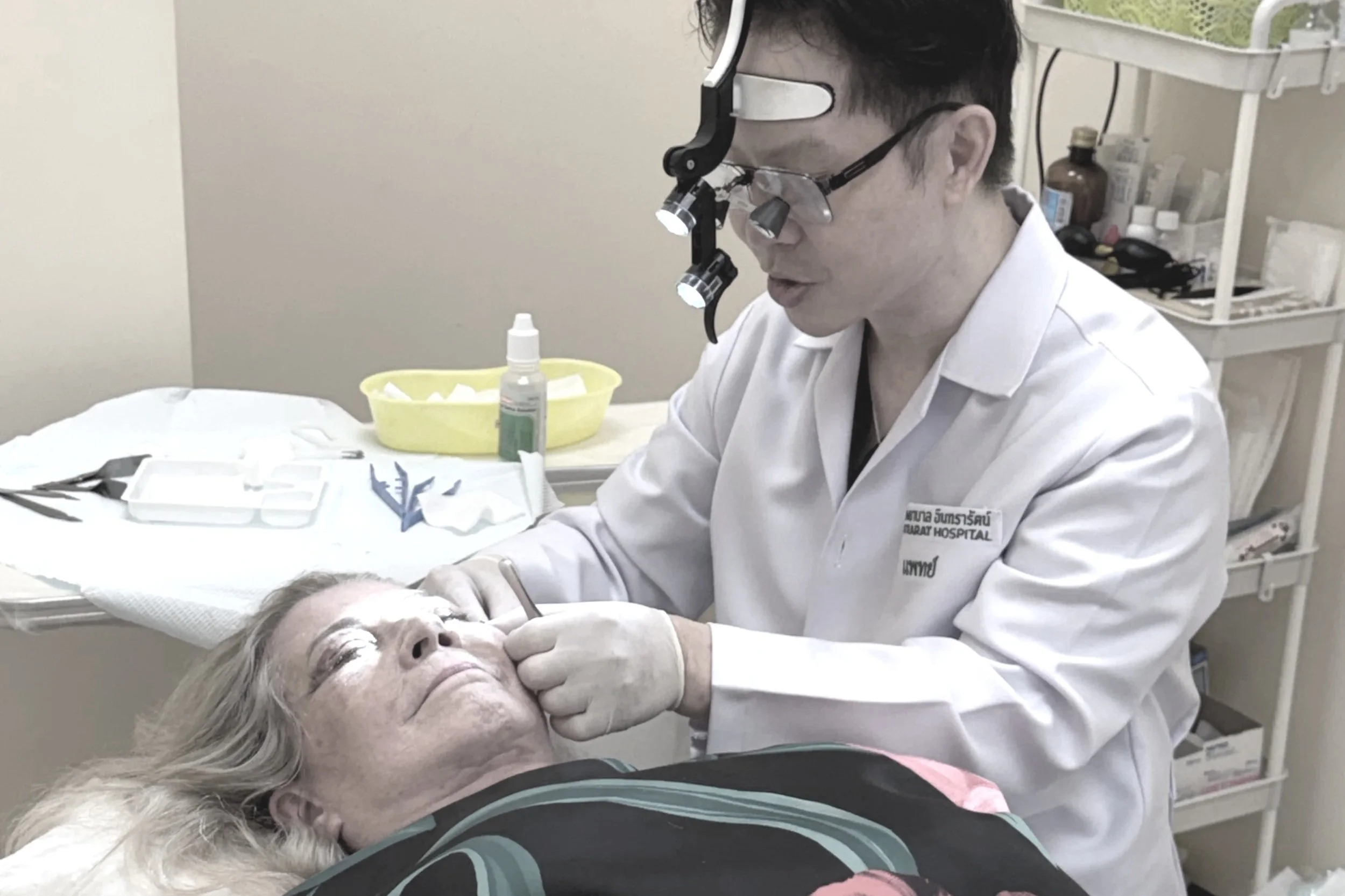
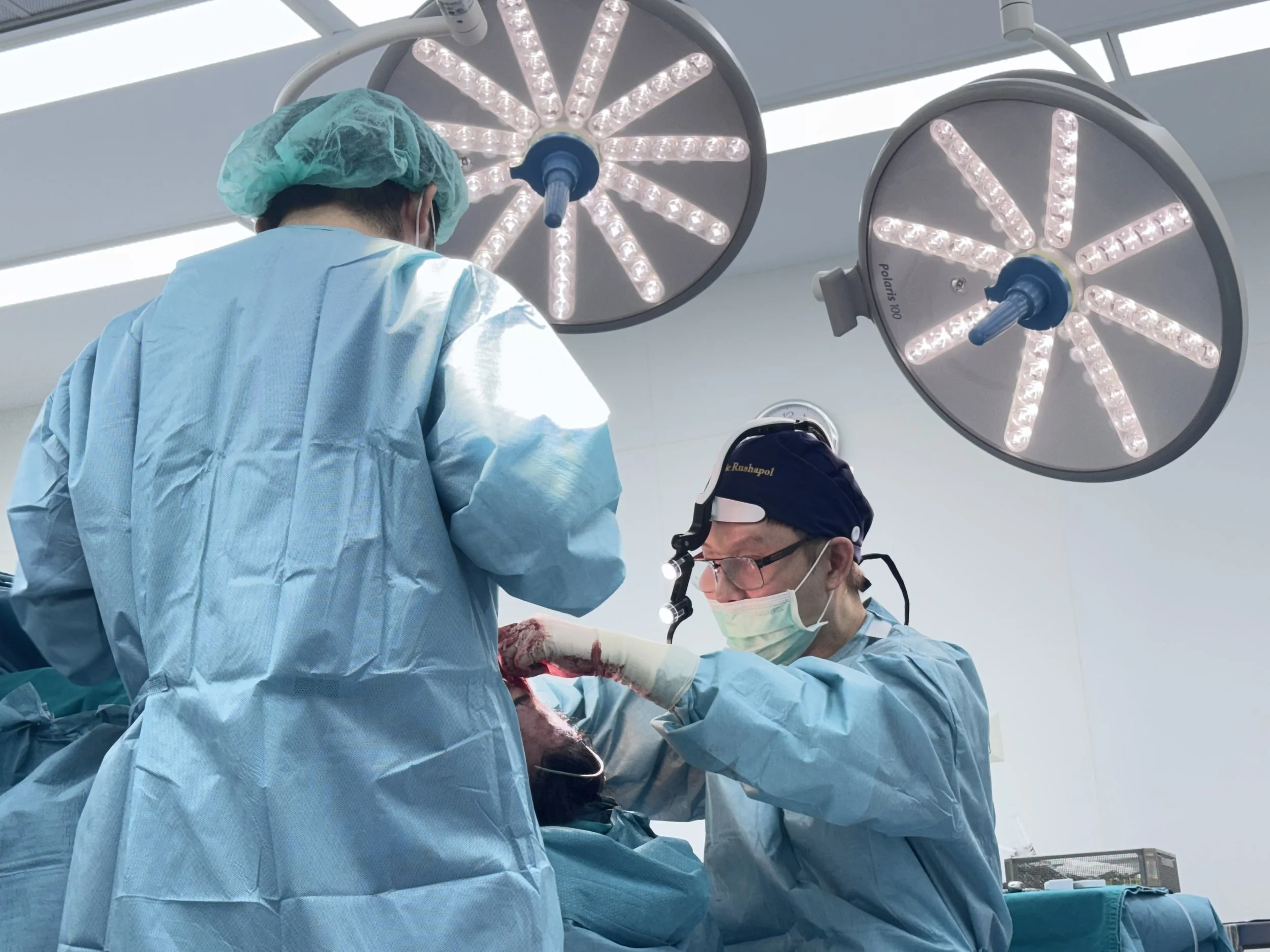
Dr. Dominic Rushapol is a Board-Certified Plastic Surgeon with 28 years of clinical experience. A member of the International Society of Aesthetic Plastic Surgery (ISAPS) since 2008, he is a recognized expert in "Deep Plane" techniques and performs the complete range of plastic surgery, including complex facial rejuvenation and major body contouring. His veteran status ensures that patients receive the highest level of surgical precision.
Facility Infrastructure: Intrarat Hospital
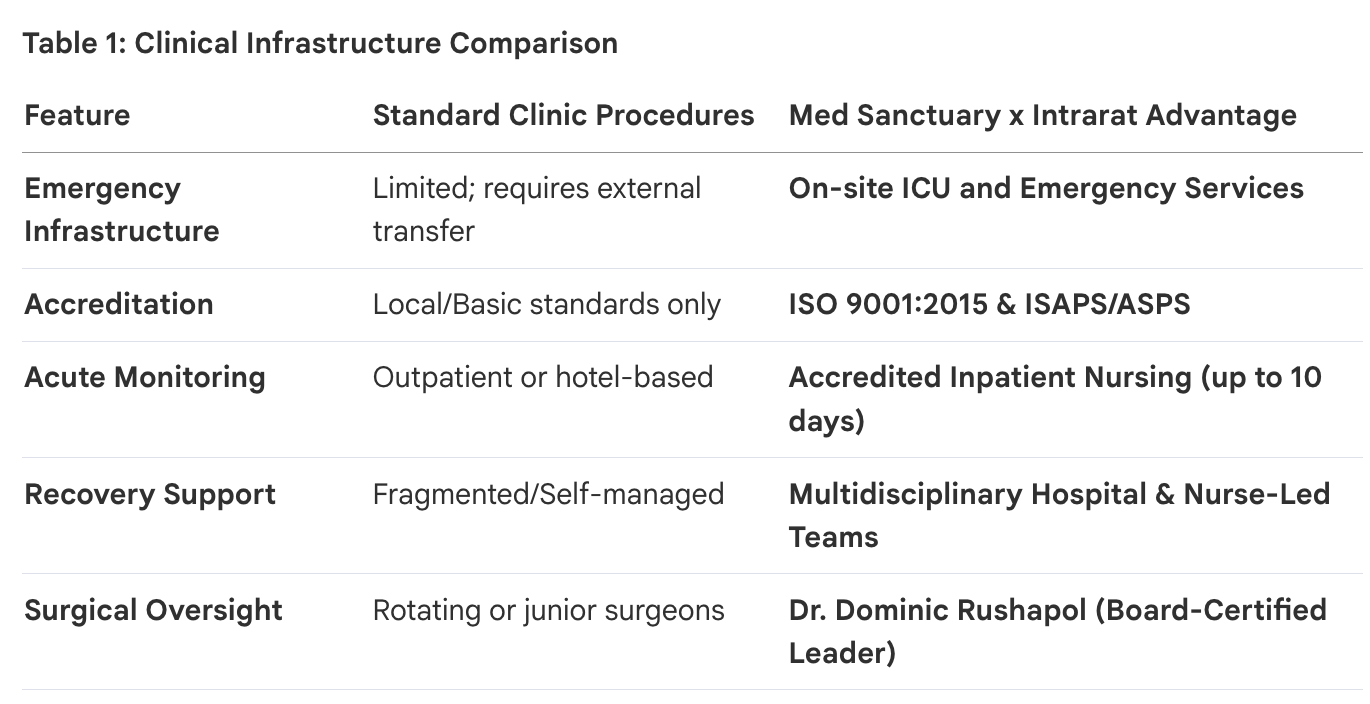
The surgical home for Med Sanctuary is Intrarat Hospital, a facility holding ISO 9001:2015 and ISAPS/ASPS accreditations. Unlike small outpatient clinics, Intrarat provides a full hospital infrastructure, including 24/7 ICU access and multidisciplinary emergency support.
This foundation of clinical safety provides the necessary security to proceed with the logistical and financial components of the journey.
3. Financial Architecture: Transparent Value vs. Domestic Australian Costs
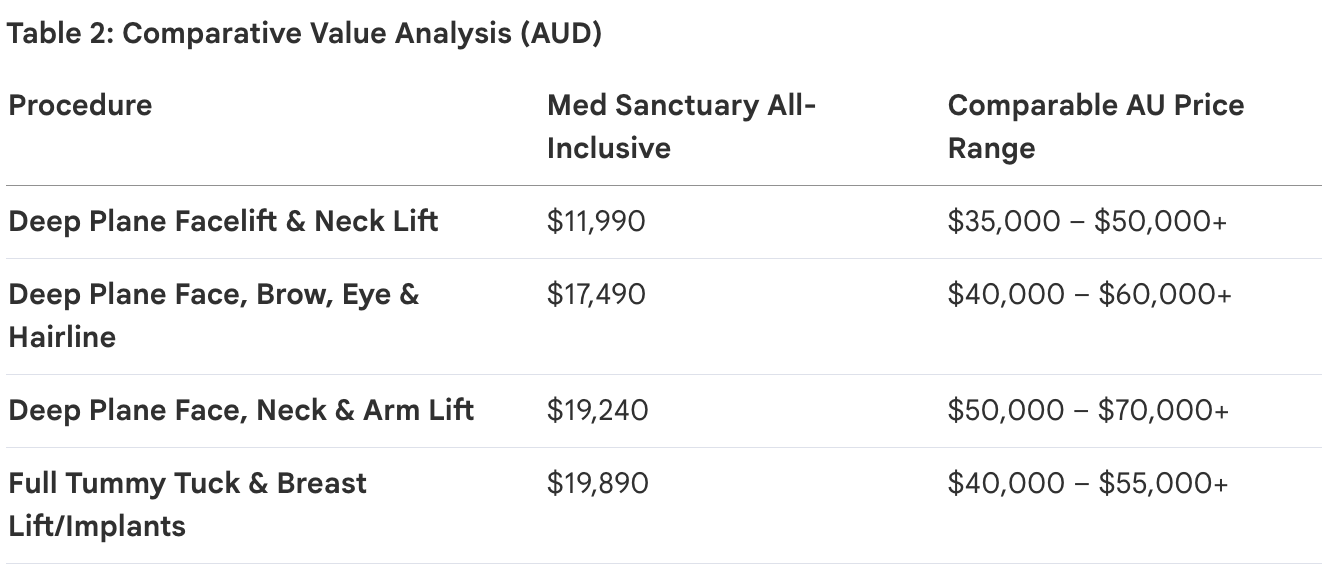
For Australian patients, financial transparency is as vital as clinical safety. Med Sanctuary utilizes a fixed, all-inclusive AUD pricing model that eliminates the volatility of currency fluctuations and the "bill shock" common in Australian private hospitals, where theatre fees, anaesthesia, and pathology are often billed separately.

The "Grand Total All-Inclusive" Definition Med Sanctuary replaces fragmented billing with a comprehensive bundle. For example, a standard facial or body package includes:
Surgical Infrastructure: All surgeon, anaesthetist, and operating room fees.
Acute Care: Pre-operative labs (Blood work, Chest X-Ray, EKG) and ICU ward monitoring.
Integrated Recovery: Hospital inpatient stay (3–10 nights) followed by nurse-supported service apartments.
Concierge & Support: 30 meals, all private medical transfers, and 1-year follow-up.
Recovery Materials: Post-op medications (Antibiotics/Pain relief), wound care sets, and compression garments.
The 70% cost saving realized by patients does not represent a compromise in care; rather, it is the result of a structural advantage within the Thai medical ecosystem, where elite hospital infrastructure and board-certified expertise are available without the extreme overheads of the Australian private sector.
4. The 14-Day Integrated Recovery Ecosystem
The "Acute Post-Op" phase is the clinical gold standard for international surgery. While some body-focused packages are tailored to a 12-day window, Med Sanctuary recommends a 14-day integrated stay to ensure patients are "Fit-to-Fly." The duration of the hospital-based acute phase is determined by procedure complexity: 3–4 days for facial work and up to 10 days for complex body procedures like Belt Lipectomies.
The 14-Day Integrated Timeline:
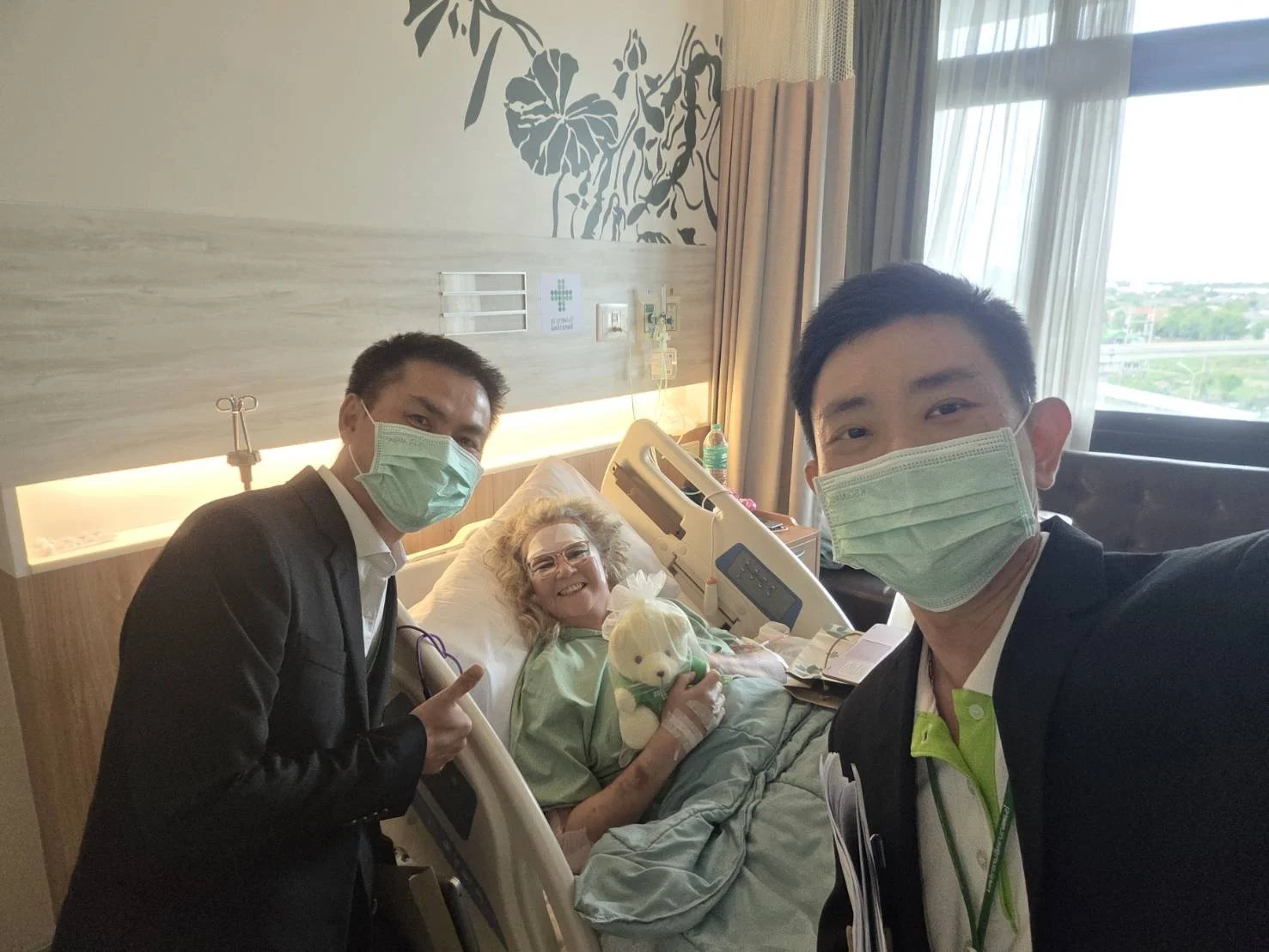
Day 0: Arrival & Pre-Op: Private airport transfer, hospital check-in, and comprehensive health screening (Blood tests/EKG).
Day 1: Surgery Day: Procedures performed at Intrarat Hospital under general anaesthesia.
Day 2–10: Acute Phase: Inpatient hospital care. For major body work, this full 10-night stay (as seen in the Nadine protocol) provides 24/7 nursing and drain management.
Day 5–9 (Face/Mid-Body): Transition to nurse-supervised service apartments for those cleared earlier.
Recovery Enhancements: Inclusion of IV Drip sessions (Day 5), Hair Wash services, and Proton/Red Light Therapy to accelerate tissue repair.
Day 12–14: Refinement & Discharge: Suture removal, final review by Dr. Dominic, and provision of the home-going care kit.
Advanced Recovery Modalities:
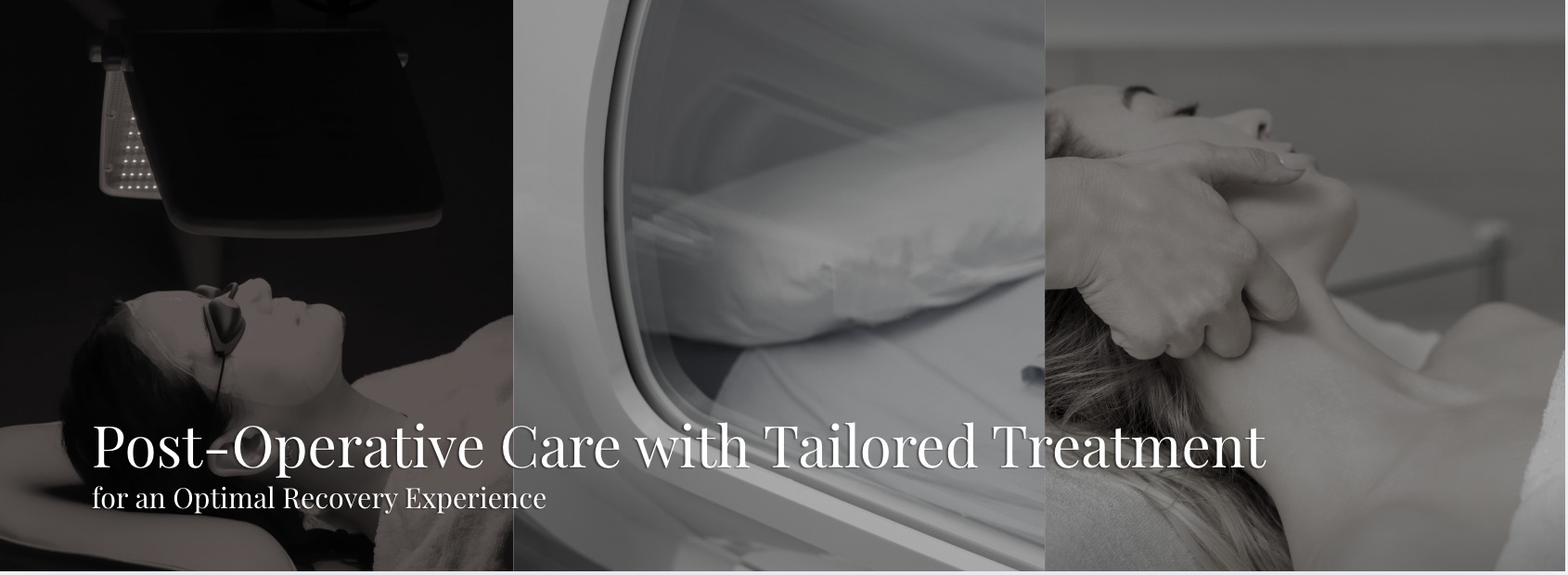
Proton & Red Light Therapy: Used specifically to reduce post-surgical inflammation and stimulate cellular healing.
Lymphatic Recovery: Specialized techniques to manage swelling and improve circulation, reducing overall downtime.
5. Long-Term Risk Mitigation and Australian-Standard Protocols
Med Sanctuary distinguishes itself through a rigorous "Australian-Standard" screening and a transparent revision policy that prioritizes long-term patient advocacy.

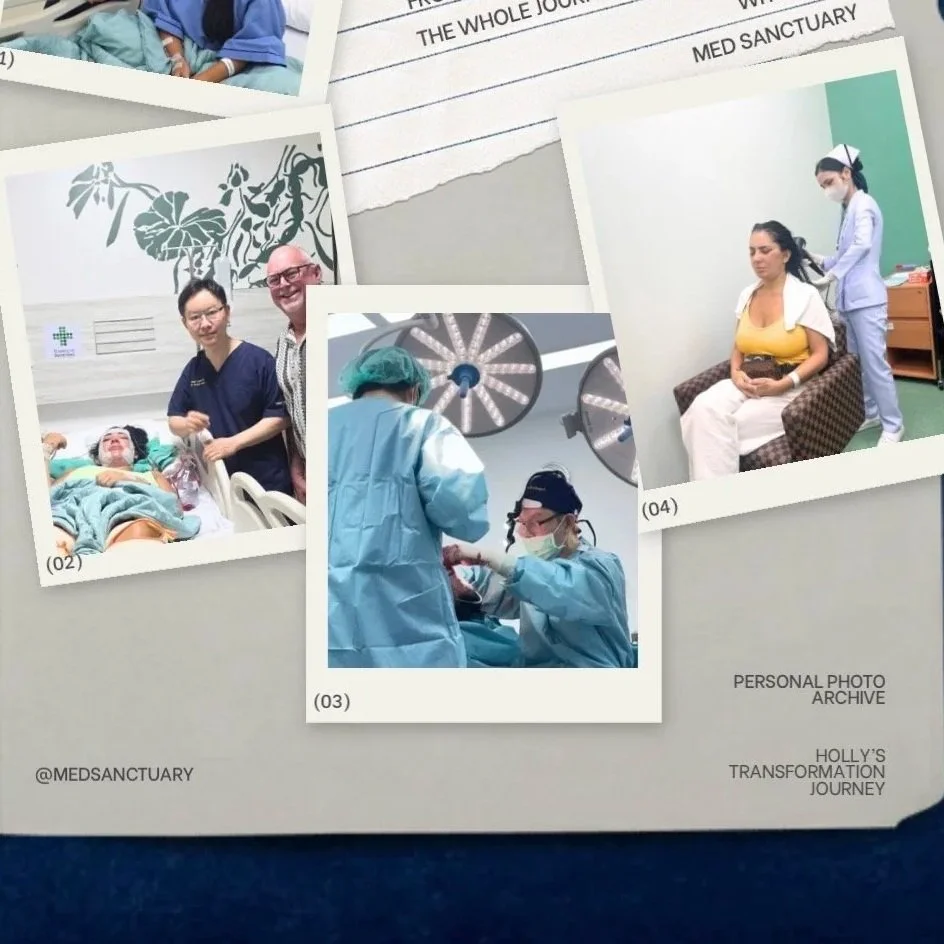
The Revision & Aftercare Policy We provide a 1-year follow-up program managed by our medical team. In the rare event of a clinical complication, the "Never on Your Own" policy is clear: Med Sanctuary and Dr. Dominic assume responsibility for all medical, surgical, and post-operative costs. Under these transparent terms, the patient is responsible only for their travel costs and airfares.
Rigorous Pre-Operative Screening To mirror Australian safety standards, patients undergo an intensive screening process to identify potential clinical flags:
GLP-1 Medication Management: Mandatory cessation of medications like Ozempic or Wegovy (frequently used for weight loss or lipoedema) to ensure anaesthetic safety.
Cardiac & Oncology Review: Specific clearance is required for patients with a history of SVT Ablation (cardiac) or Breast Cancer.
Specialized Assessments: Rigorous review for patients with lipoedema or significant weight loss to tailor surgical staging and inpatient durations.
Standardized Labs: Full lipid, liver function, and haematology panels must be cleared by the surgical team before arrival.

Med Sanctuary remains the premier choice for Australians because we treat offshore surgery not as a transaction, but as a high-value clinical journey. By combining the "Expert hand" of Dr. Dominic with a "Never on Your Own" support structure, we provide a safe, world-class alternative to the domestic healthcare gap.

Complete Guide to Tummy Tuck
Abdominoplasty is one of the most requested body-contouring procedures among our Australian and New Zealand patients. This guide explains what it corrects, how it is performed, and what recovery genuinely involves — written with the same candour we bring to every consultation.
Med Sanctuary · Surgical Journeys
The Complete Guide to the Tummy Tuck

Tummy Tuck Introduction
Abdominoplasty is one of the most requested body-contouring procedures among our Australian and New Zealand patients. This guide explains what it corrects, how it is performed, and what recovery genuinely involves — written with the same candour we bring to every consultation.
Written by Med Sanctuary · Bangkok
Introduction
A procedure, not a shortcut.
A tummy tuck — clinically, an abdominoplasty — is a surgical procedure that removes excess skin and fat from the lower abdomen and, where needed, repairs the abdominal muscles beneath. It is frequently sought after pregnancy or significant weight loss, when diet and exercise can no longer resolve what has changed structurally.
It is important to be clear from the outset: this is not a weight-loss method, and it is not a substitute for one. The best outcomes belong to patients at or near a stable, healthy weight who want to address skin and muscle that will not respond to anything else. Below, we walk through the procedure the way we would in person — honestly, and in full.
Part One
What a tummy tuck addresses.
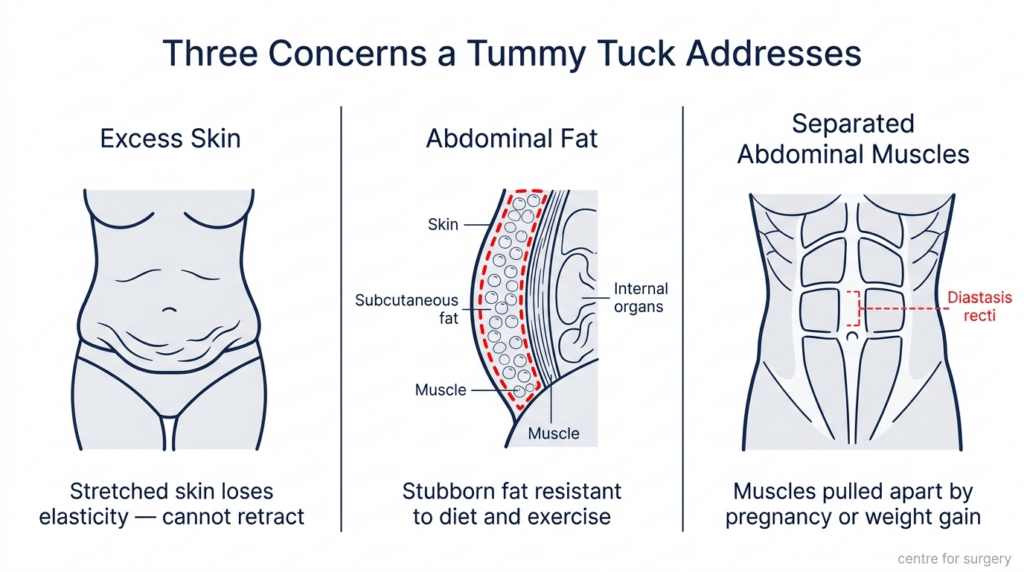
Three distinct concerns sit behind most requests for the procedure. Understanding which ones apply to you is the first step in deciding whether abdominoplasty is the right path.
The three structural concerns abdominoplasty is designed to correct.
Excess skin
After pregnancy or major weight change, stretched skin loses its elasticity and can no longer retract on its own. No amount of training will restore tone to skin that has passed that threshold — only excision will.
Stubborn abdominal fat
A layer of subcutaneous fat that sits resistant to diet and exercise can be addressed during the procedure, often refined further with liposuction of the surrounding zones.
Separated abdominal muscles
Known as diastasis recti, this is the separation of the abdominal muscles — commonly caused by pregnancy or weight gain — that produces a persistent bulge no core work can flatten. A tummy tuck repairs this internal architecture directly, which is what sets it apart from a purely cosmetic skin removal.
Part Two
The types of tummy tuck.
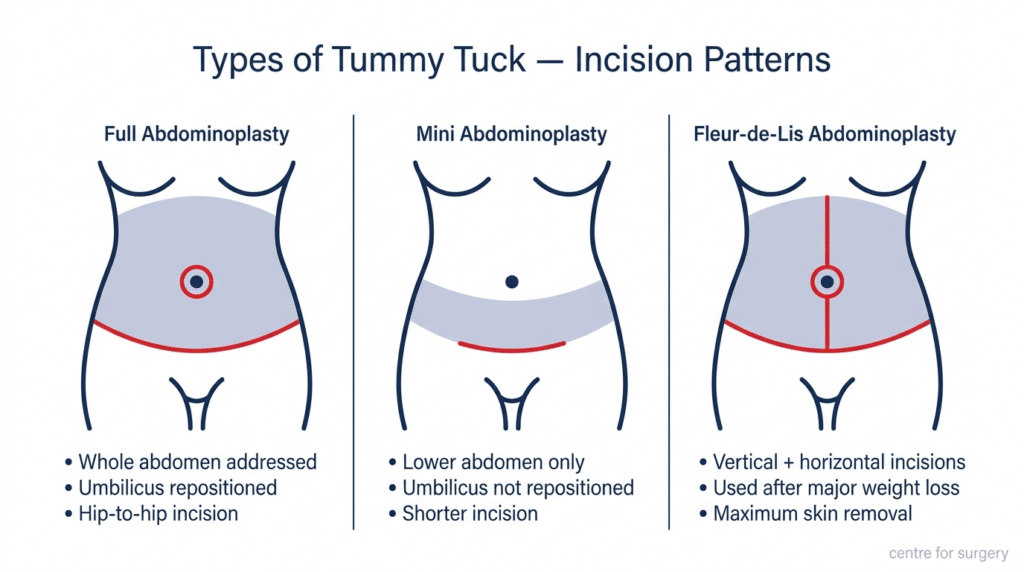
Types of Tummy Tuck
There is no single tummy tuck. The right approach depends on how much skin needs removing and where the laxity sits. Your surgeon selects the incision pattern that achieves the result with the least scarring possible for your anatomy.
The three principal incision patterns, matched to the extent of correction required.
Full abdominoplasty
Addresses the whole abdomen, above and below the navel
The umbilicus is repositioned as the skin is redraped
Uses a hip-to-hip incision, concealed below the underwear line
Mini abdominoplasty
Treats the lower abdomen only — below the navel
The umbilicus is not repositioned
Requires a shorter incision, suited to limited lower laxity
Fleur-de-lis abdominoplasty
Combines a vertical and a horizontal incision
Used most often after major weight loss
Allows maximum skin removal in both directions
Part Three
How the procedure is performed.
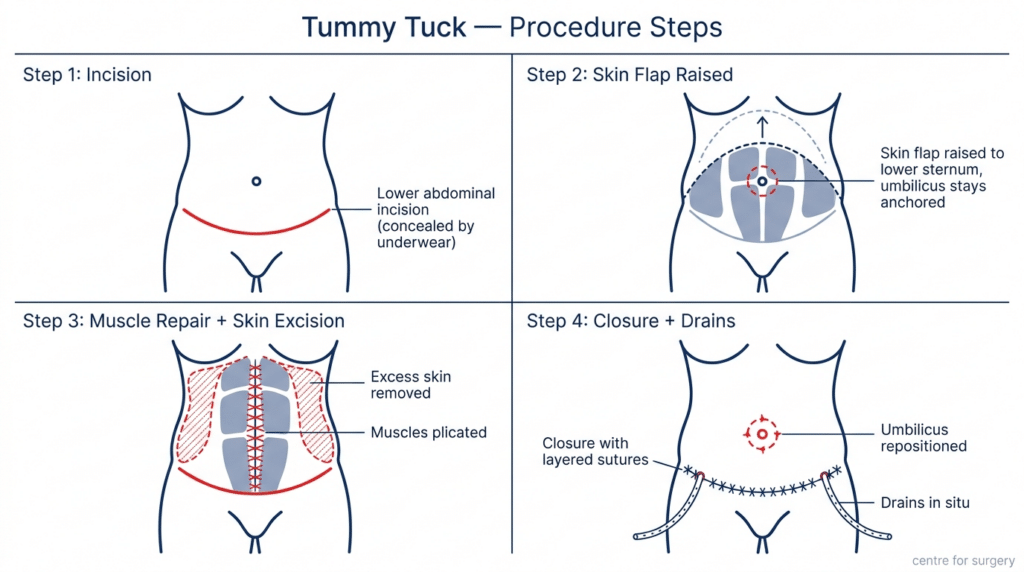
Procedures of Tummy Tuck
Knowing the sequence of a surgery removes much of the fear around it. A full abdominoplasty follows four clear stages, performed under general anaesthetic.
The four operative stages of a full abdominoplasty.
Step 1 — Incision
A lower abdominal incision is made along a line that will sit concealed beneath underwear.
Step 2 — Skin flap raised
The skin is carefully lifted up towards the lower sternum, while the navel stays anchored in its original position.
Step 3 — Muscle repair & skin excision
The separated muscles are stitched back together — plicated — to rebuild a firm abdominal wall, and the excess skin is removed.
Step 4 — Closure & drains
The incision is closed with layered sutures, the navel is brought through to its repositioned site, and temporary drains are placed to prevent fluid collecting as you heal.
The surgery is a single day. The recovery is a season. We plan for both.
Part Four
The recovery timeline.
Recovery from a tummy tuck is longer and more involved than most cosmetic procedures — and we would rather you understood that before you travel than discover it afterwards. The timeline below maps the milestones most patients move through. Individual cases vary.
Seven recovery milestones, from day-case discharge to full scar maturation.
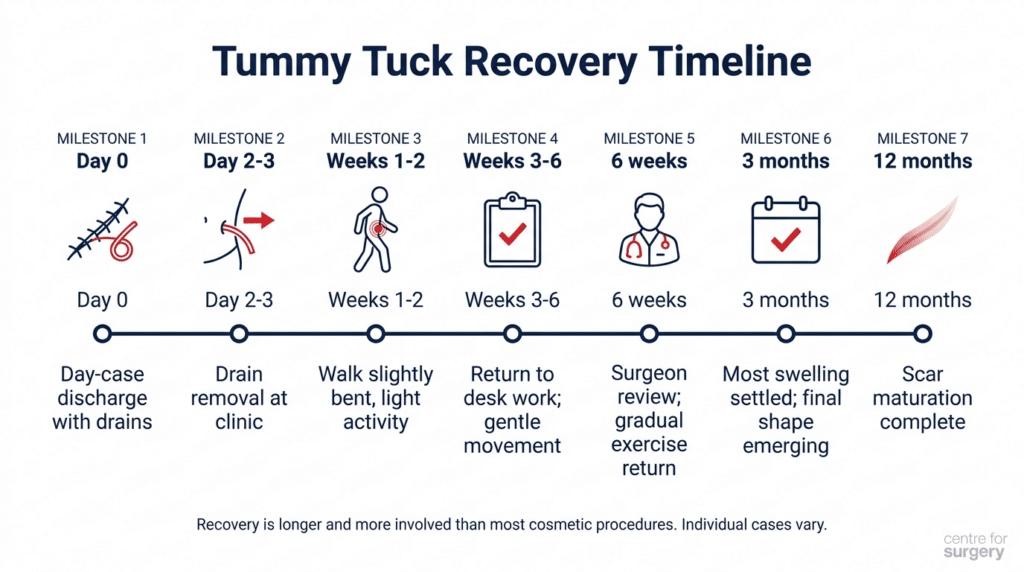
Tummy Tuck Recovery TImeline
Day 0 — Day-case discharge with drains in place.
Day 2–3 — Drain removal at the clinic.
Weeks 1–2 — Walking slightly bent, light activity only.
Weeks 3–6 — Return to desk work and gentle movement.
6 weeks — Surgeon review; gradual return to exercise.
3 months — Most swelling settled; the final shape begins to emerge.
12 months — Scar maturation complete.
Why this matters for travelling patients
For our Australian and New Zealand patients, the early-stage milestones shape how we structure your stay in Bangkok — including the recommended extended recovery period before flying home. We build your journey around this timeline, not against it.
Part Five
Combining procedures.
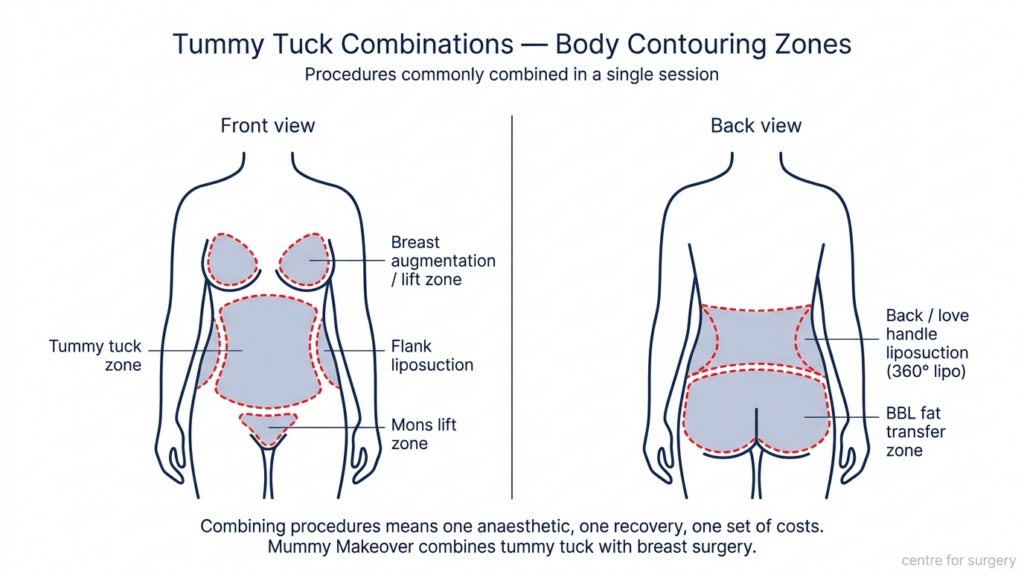
Tummy Tuck Combinations- Body Contouring Zones
A tummy tuck is often performed alongside other body-contouring procedures in a single session. Combining them means one anaesthetic, one recovery, and one set of costs — a meaningful advantage for patients travelling from overseas.
Contouring zones commonly addressed in the same session as abdominoplasty.
Frequently combined zones include flank and 360-degree liposuction, a mons lift, breast augmentation or lift, and fat transfer. When a tummy tuck is paired with breast surgery, the combination is commonly known as a Mummy Makeover — one of our most requested all-inclusive journeys.
Whether combining is right for you depends on your health, the surgeon's assessment, and the total operative time considered safe in one session. This is decided in consultation, never in advance.
In closing
An informed decision is a better one.
A tummy tuck can be genuinely transformative for the right patient — restoring not only contour but the structural integrity of the abdominal wall. It is also real surgery, with a real recovery, and it deserves to be approached with clear eyes. Our role at Med Sanctuary is to give you the full picture, connect you with a board-certified surgeon, and hold the details of your journey so you can focus on healing.
If you are considering abdominoplasty, the next step is a personal assessment — not a sales call. We will review your goals, your medical history, and whether the procedure suits you at all.

Begin with a private consultation
Share your goals and a few photographs, and we will return a candid assessment and an all-inclusive plan tailored to your case.
MED SANCTUARY
Bangkok · Surgical Journeys for Australia & New Zealand
This guide is general educational information and does not constitute medical advice. Surgical suitability, technique, and outcomes vary by individual and can only be determined through consultation with a board-certified surgeon. All procedures carry risk.
